
Collect heat
In the evaporator, a refrigerant absorbs heat from the source and evaporates. Even cold outdoor air can provide heat; the available heat and efficiency depend on the conditions.
From homes to commercial buildings: a heat pump needs the right capacity, heat distribution and integration.
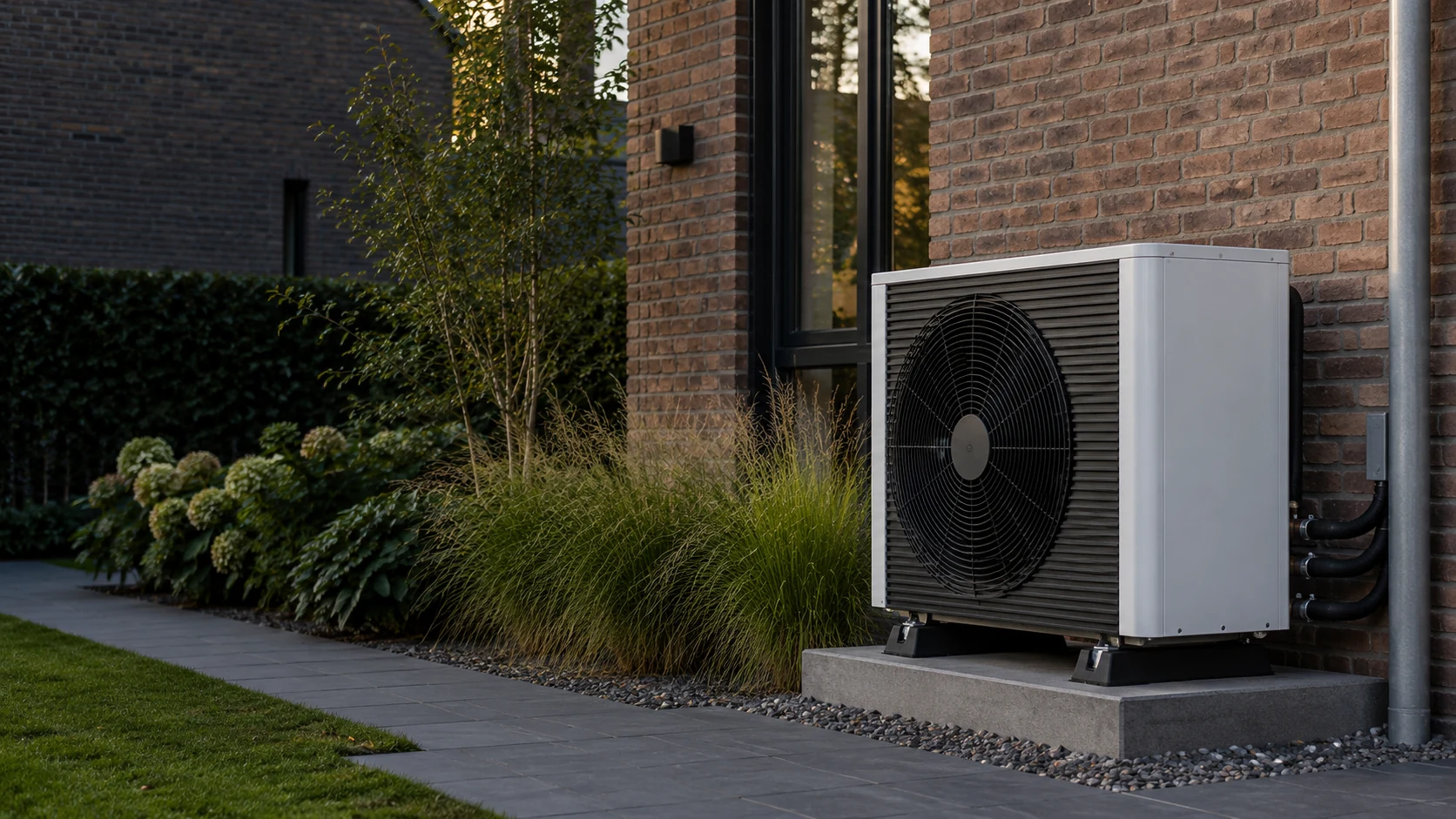
A heat pump transfers heat from the environment into your home or business premises. Depending on the system, the source is outdoor air, the ground or water. Electricity powers the process that delivers this heat at a useful temperature.
In the evaporator, a refrigerant absorbs heat from the source and evaporates. Even cold outdoor air can provide heat; the available heat and efficiency depend on the conditions.
An electrically driven compressor increases the refrigerant pressure and temperature, making the heat suitable for heating the building.
The refrigerant releases heat in the condenser. An air-to-water system transfers this heat to water for underfloor heating or suitable radiators. Domestic hot water requires equipment designed for that purpose.
An expansion valve lowers the refrigerant pressure so the cycle can start again. The controls adjust output to match the heating demand.
Insulation, suitable sizing and an appropriate heating-water temperature help the system operate efficiently. A hybrid system works alongside a boiler; a fully electric installation heats without a central heating boiler. Cooling requires compatible equipment and a suitable heat distribution system.
Request advice for your situation →We help you choose a system by assessing insulation, heat loss, existing heating equipment, space, noise and your heating and cooling needs. Our proposal explains the technical and practical requirements.
Performance and suitability depend on the building and system. Savings cannot be promised without project-specific information.
Request adviceFrom a comfortable shower at home to a reliable hot water supply for a hotel or apartment building, SCS advises on, supplies and installs solutions suited to your building and usage.
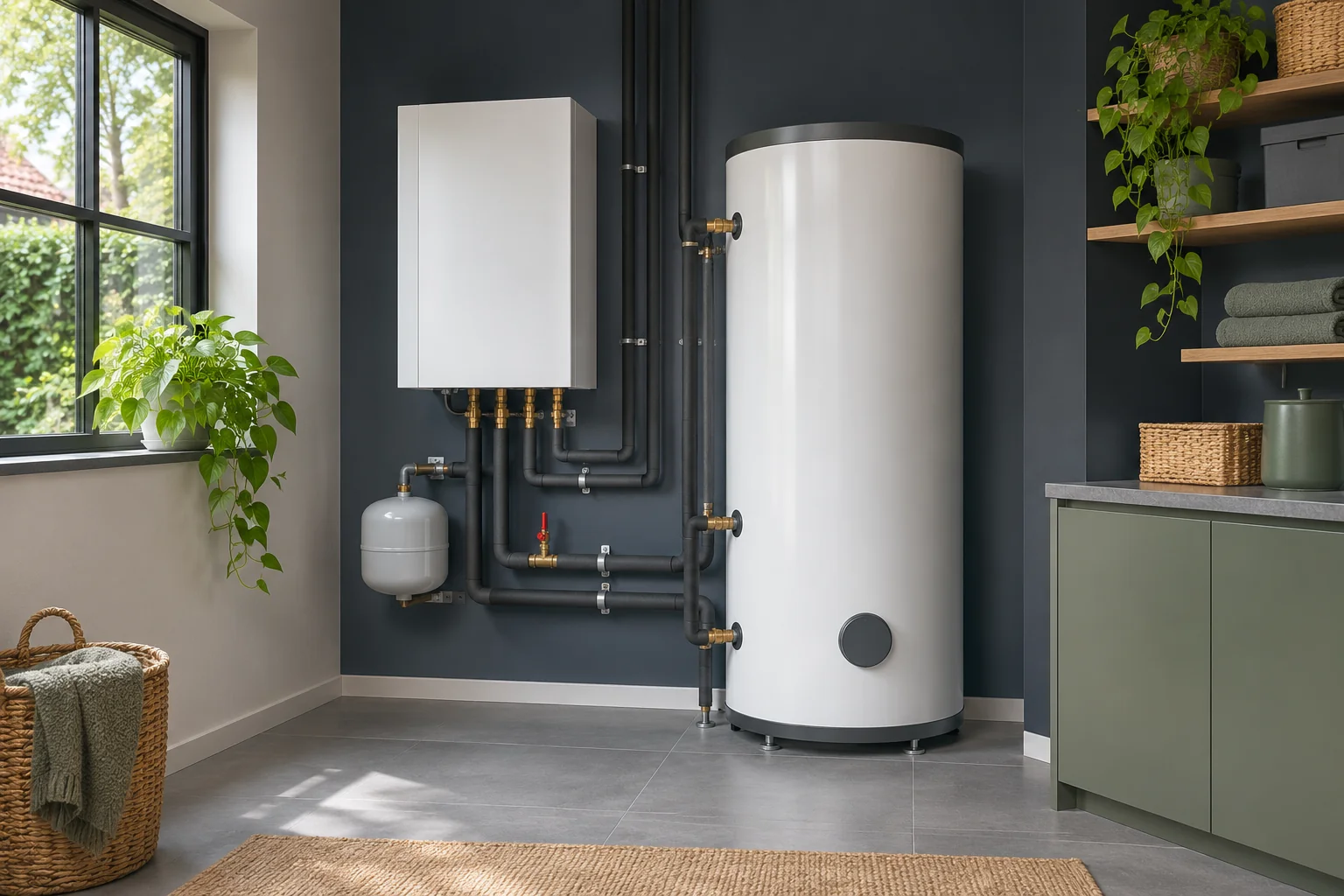
A heat pump water heater combines a heat pump for domestic hot water with an insulated storage cylinder. A separate cylinder can also be connected to a compatible external heat pump or another heat source. The right choice depends on the existing installation, ventilation, location and hot water demand.
A unit that heats and stores domestic hot water. Depending on the model, it uses room air or ducted air; suitability, sound and airflow are assessed beforehand.
An insulated cylinder for domestic hot water, heated by a suitable heat source, often through a heat exchanger. Available hot water also depends on temperature and recovery time.
A buffer tank for space-heating water and a cylinder for domestic water serve different purposes. We select the arrangement to fit the design and applicable requirements.
A heat pump, heat pump water heater or other suitable heat source heats the water directly or through a heat exchanger.
The insulated cylinder keeps domestic hot water available until needed. Some heat loss occurs even with good insulation.
Opening a tap draws from the hot water supply. Simultaneous demand and long showers use the stored supply more quickly.
Controls restart the heat source when needed. Capacity and recovery time are matched to expected demand and the installation.
For homes, we often discuss cylinders from approximately 150 litres. Larger households and commercial applications may need 300, 500, 1,000 litres or more, potentially across several cylinders. These examples are not standard recommendations: sizing follows an assessment of peak demand, simultaneous use, heat input, recovery time and available space.
For hotels, apartment buildings and business premises, we assess outlets, occupancy, peak demand, pipework and plant-room space. Depending on the project, we discuss one or more cylinders, a central heat source and suitable controls. Maintenance access, continuity and phased installation are also considered.
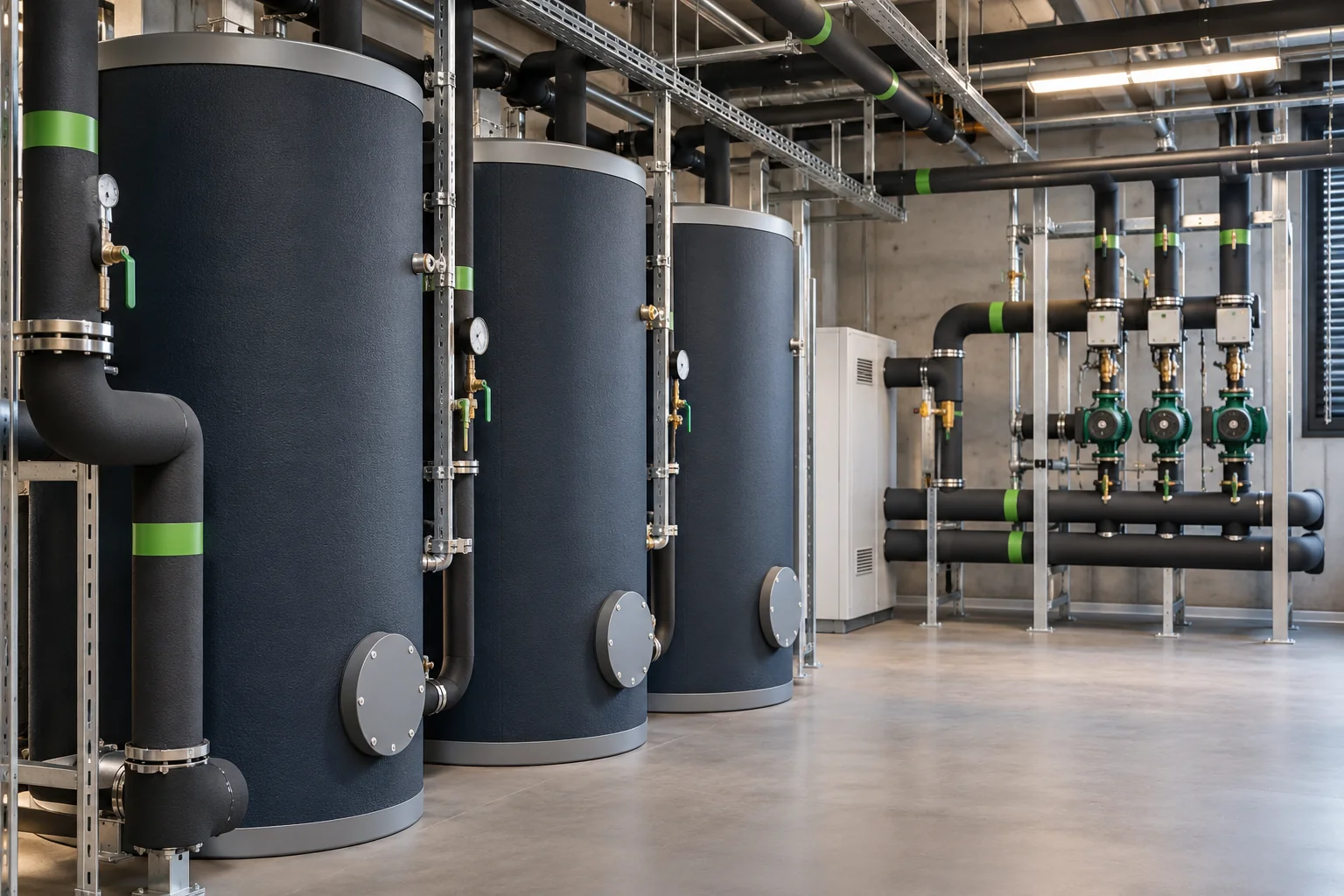
Domestic hot water design requires attention to water hygiene, temperature, flow and pipe length. Appropriate measures, any legionella prevention and management responsibilities depend on the building, installation and use. SCS discusses these for each project and coordinates work with applicable requirements.
Not always. Appropriate capacity depends on occupancy, shower duration, simultaneous use and the speed at which the cylinder reheats.
It depends on the design. In many hybrid systems the existing boiler continues to provide hot water; another arrangement requires compatible equipment.
A heat pump water heater combines a heat pump for domestic hot water with storage. A separate cylinder is heated by an external source, such as a compatible heat pump.
Yes. A communal solution can be designed where it meets hot water demand and the building’s technical and hygiene requirements.
Tell us about your building, the number of users and your existing installation. We will discuss the options and prepare a tailored proposal.
Request a no-obligation quotation →Please provide the building year, floor area, insulation, current energy use and heating system. Photos of the plant room and possible outdoor location help us prepare a site assessment.
We assess the existing installation and integration options. The proposal covers system choice, necessary modifications, positioning and installation.
Contact us with the property address, requirements and schedule. We discuss the technical requirements before preparing a proposal. Also see our grants advice and maintenance options.
Based in Dordrecht, we discuss projects across South Holland, including Rotterdam, The Hague, Capelle aan den IJssel and Barendrecht. Contact us to discuss work at your location.
A hybrid system combines a heat pump with a boiler. A fully electric system heats the building without a central heating boiler; domestic hot water is included in the system design. SCS assesses insulation, heat loss, radiators or underfloor heating, available space and your requirements to explain the options in a technical proposal.
Discuss your requirements →From a home to a commercial building: we provide technical and practical advice.